Fandom
Filming Locations Become Pilgrimage Sites And The Towns Rarely Choose It
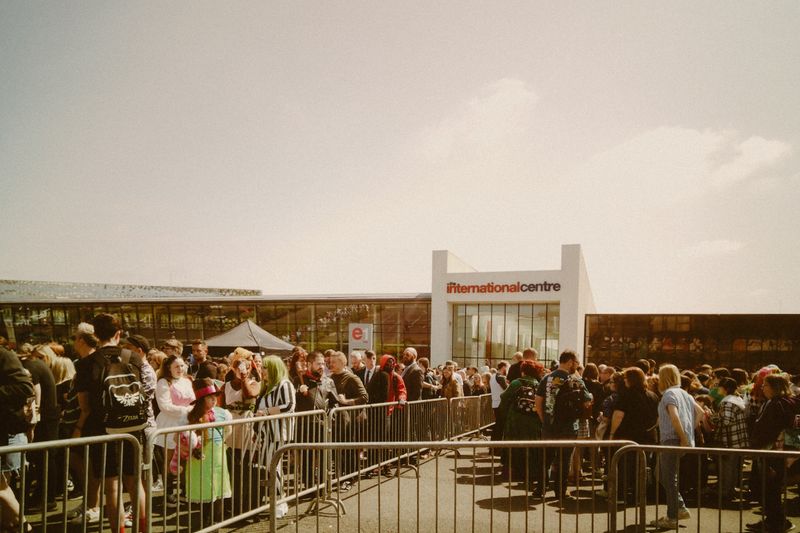
When audiences travel to places where something was filmed, the visits create real economic and social effects for residents who had no say in the production's decisions.

A place that appears on screen can acquire a permanent stream of visitors. The place itself is unchanged, and the effects on the people living there are substantial.
Recognition works differently from ordinary tourism
Conventional sightseeing is drawn by a landmark. Screen tourism is drawn by a match between a remembered image and a physical spot, which can be an unremarkable street corner.
The visit is about verification. Standing where a scene was staged confirms that a fictional experience touched a real place, and the ordinariness of the location is part of the effect.
This means the sites cannot be predicted from any quality of the place. A location becomes significant because of what was shot there, not because of anything visitors would otherwise notice.
The arrivals land on residents rather than institutions
A museum has staff, opening hours and a way to manage crowds. A residential street has none of that, and the people affected are householders going about their week.
Visitor numbers can be significant relative to a small settlement's population, and they concentrate in a few spots that appeared prominently rather than spreading across the area.
The resulting tension is predictable. Some residents welcome the trade, others find their daily routine obstructed, and the split runs roughly along whether a household benefits commercially.
Productions leave before the consequences arrive
A shoot negotiates access, pays for the disruption it causes, and departs. The compensation covers the filming period, not the years of visitors that follow.
Nobody involved is behaving badly, because the visits are genuinely unforeseeable. Most locations never attract anyone, and there is no way to identify in advance which ones will.
Local authorities are left to manage a phenomenon they did not create and cannot switch off. Their options are limited to signage, parking control and asking visitors to be considerate.
The economic effect is real but oddly shaped
Screen tourism brings genuine spending, and places that lean into it can build a durable trade around guided walks, accommodation and food.
The trade is unusually dependent on a single property, though, and interest declines as the work ages. Businesses built entirely on one title inherit that title's trajectory.
Somewhere with several filming histories fares better, since the audiences arrive at different times and for different reasons, smoothing what would otherwise be a sharp peak and a long fall.
The place and the fiction stop being separable
After enough visits, a location's identity absorbs the fiction. Residents find their address described in terms of a story, sometimes for decades.
For some communities this is a welcome distinction and becomes part of local pride. For others it overwrites a history that mattered more to the people who live there.
Either way the change is not reversible by anyone locally. What a place means to outsiders was decided by a scouting choice made years earlier for reasons of light and access.
Questions readers ask
Can a film be designed as a cult film?
Attempts are frequent and almost always fail. The status depends on an audience discovering something for themselves, which a deliberate strategy tends to prevent.
Does streaming make cult status easier or harder?
Both. Availability is broader, which helps discovery, but works disappear unpredictably and the shared experience of a screening is harder to replicate.
Also by Harsha Vardhan
- Foley is a person in a room pretending to be your footsteps, and real sound will not doHow It Is Made
- Previsualisation turned expensive guesswork into a rough cut made before shootingHow It Is Made
- Dubbing and subtitling are two different arguments about what a performance isHow It Is Made
- The first assistant director runs the day, and the schedule is a creative documentHow It Is Made