Fandom
Watch Parties Turned Solo Viewing Into A Scheduled Event
Coordinated group viewing rebuilt the appointment habit that on-demand release destroyed, and the reason it took hold has more to do with conversation timing than with technology.

On-demand release let everyone watch on their own schedule, which quietly removed the shared clock that made television social. Watch parties are the audience rebuilding that clock by hand.
Simultaneity was the thing that got lost
A conversation about a story works best when everyone in it has the same information at the same moment. Staggered viewing breaks that condition immediately and permanently.
Once viewers are spread across days or weeks, discussion turns into spoiler management. People self-censor, and the enthusiasm that follows a big episode dissipates before most of the group arrives.
Scheduling a group viewing restores the condition artificially. It is a small piece of coordination that buys back a large amount of conversational value.
The format borrowed from sports viewing
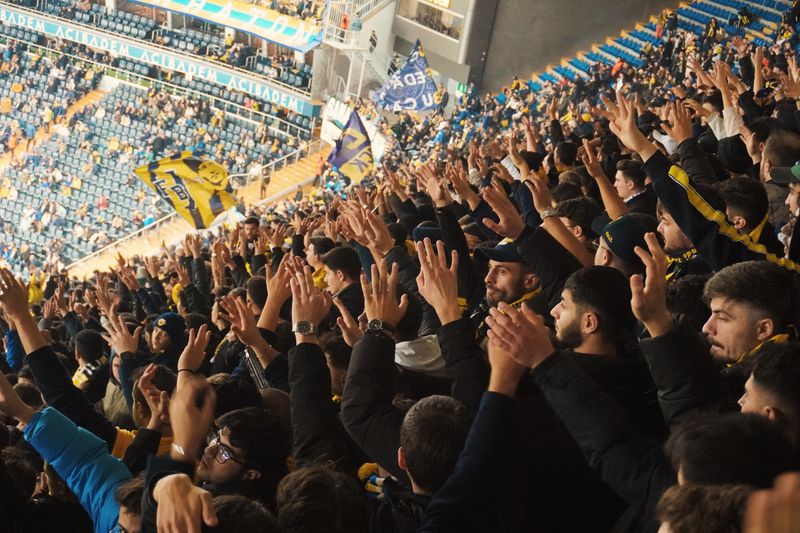
Americans already had a template for organized group watching, built around games: a fixed start time, a host, food, and an accepted level of talking over the broadcast.
Fan watch parties adopted that shape almost intact. The host handles the room, the start time is non-negotiable, and reaction is expected rather than shushed.
That inheritance is why the etiquette differs from a movie theater. Nobody in a living room is pretending they are alone with the screen.
Remote parties solved distance and created lag
Distributed groups moved the practice online, syncing playback while running a text or voice channel alongside it. The social layer became explicit rather than ambient.
The technical difficulty is that streams drift. Even small differences in buffering mean one viewer reacts to a moment several seconds before another sees it.
Groups handle this with countdowns, pause conventions and a tolerance for slight desync, which is a surprising amount of protocol for something that is supposed to be relaxing.
Rewatches behave differently from premieres
A premiere party runs on suspense, and the room's job is to react. Nobody wants analysis while the episode is still delivering information.
A rewatch inverts that. Everyone already knows the outcome, so attention shifts to construction, foreshadowing and performance, and the talking becomes the point rather than an interruption.
Communities that run both tend to keep them separate, because mixing a first-time viewer into a rewatch group produces an experience neither side wanted.
Organizers do more work than attendees notice
Someone chooses the title, sets the time across time zones, secures the room or channel, and decides how strict the spoiler rules will be before and after.
That role is unpaid and repetitive, and groups usually survive only as long as the organizer's patience does. Attendance is easy, hosting is a commitment.
Where a group lasts for years, there is almost always a small rotating set of hosts rather than one, because distributing the burden is the only structure that outlives enthusiasm.
Questions readers ask
Can a film be designed as a cult film?
Attempts are frequent and almost always fail. The status depends on an audience discovering something for themselves, which a deliberate strategy tends to prevent.
Does streaming make cult status easier or harder?
Both. Availability is broader, which helps discovery, but works disappear unpredictably and the shared experience of a screening is harder to replicate.
Also by Harsha Vardhan
- Foley is a person in a room pretending to be your footsteps, and real sound will not doHow It Is Made
- Previsualisation turned expensive guesswork into a rough cut made before shootingHow It Is Made
- Dubbing and subtitling are two different arguments about what a performance isHow It Is Made
- The first assistant director runs the day, and the schedule is a creative documentHow It Is Made