Film & Screen
Comedies Are Timed For An Audience Nobody Has Yet
Jokes need room for laughter that the editing room cannot hear, so comedy is cut, tested with real audiences and recut around the reactions those screenings produce.

A comedy edited in silence will not play in a full room. The gap between those two conditions is the central technical problem of cutting comedy, and it is solved empirically.
Laughter occupies time the edit did not allocate
When an audience laughs, they stop hearing the film. A line delivered immediately after a big laugh is lost, and with it whatever information that line was carrying.
An editor working alone has no laughter to account for, so the cut naturally runs tight and the next beat arrives while a real audience would still be reacting.
Comedy therefore has to be lengthened in specific places, and knowing which places requires hearing an actual crowd respond.
Preview screenings function as measurement
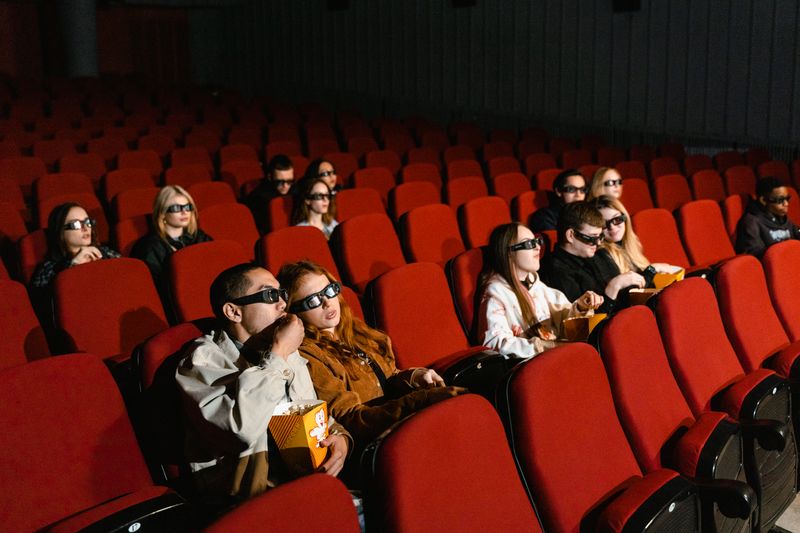
Recruited audiences are shown unfinished cuts, and the filmmakers sit in the room listening rather than watching. What they are recording is where the laughs land and how long they last.
A laugh that runs long means the following moment needs a beat of space. A laugh that fails to arrive where one was expected marks a joke that is not working as constructed.
The same screening also reveals accidental laughs, which are more troubling because they usually indicate that a serious moment has been staged or performed in a way the room rejects.
Fixes are made in frames, not in pages
Much of the recutting that follows is small: a few frames added before a reaction, a reaction shot held longer, an entrance delayed slightly so it arrives on its own.
Timing of that granularity is why comedy editing is regarded as a specialty. The material is not being restructured, it is being retimed against a measured response.
Where a joke fails entirely the options are harsher: cut it, replace the line with alternate coverage, or record a new line and fit it to whatever the performer's mouth allows.
Coverage is shot with this in mind
Comedy sets often record multiple versions of a line, sometimes many, precisely so the edit has options when a joke does not survive contact with an audience.
Directors also protect reaction shots and clean exits, because those are what an editor needs to build space around a laugh that turns out to be larger than expected.
A production that shoots comedy with dramatic coverage discipline frequently discovers in the edit that it has no way to fix the timing at all.
Home viewing removes the room
A film cut for a full theater is played most often by two people on a couch, where the laughter it was timed around does not occur.
The pauses built for a crowd read as slightly slack in that setting, which is one reason theatrical comedies can feel differently paced at home.
Filmmakers accept the mismatch because the alternative is worse: a cut with no room in it plays acceptably alone and falls apart in front of an audience.
Questions readers ask
Does a film's original reception count for nothing?
It counts as evidence about the moment, not about the film. It records what audiences were primed to expect, which is genuinely useful context once you stop treating it as a settled judgement.
Why do some films get rediscovered and others never do?
Availability and a trigger. A title that stayed in circulation and then acquires a reason to be revisited has both conditions met; one without the other usually goes nowhere.
Also by Reshma Qureshi
- Reshoots are ordinary film-making, not a distress signalFilm & Screen
- Documentary gets written in the edit because nobody could write it in advanceFilm & Screen
- What a music supervisor does, and why one song in one scene costs what it costsMusic
- Song introductions got shorter, and the incentive that shortened them is measurableMusic