Film & Screen
The film you saw at the wrong age sets the shape of what you look for afterwards
Taste is not assembled evenly across a lifetime. A small window does most of the work, and what lands inside it becomes the measure for everything later.

There is a short answer about formative viewing age and a useful one, and they are not the same. What follows is the useful one.
The short version
- Formative viewing tends to cluster in adolescence and early adulthood, when watching is least supervised and most social.
- The impact comes partly from the film and partly from the circumstances of seeing it.
- Later encounters with equally strong work rarely displace the earlier template.
A narrow window does most of the work
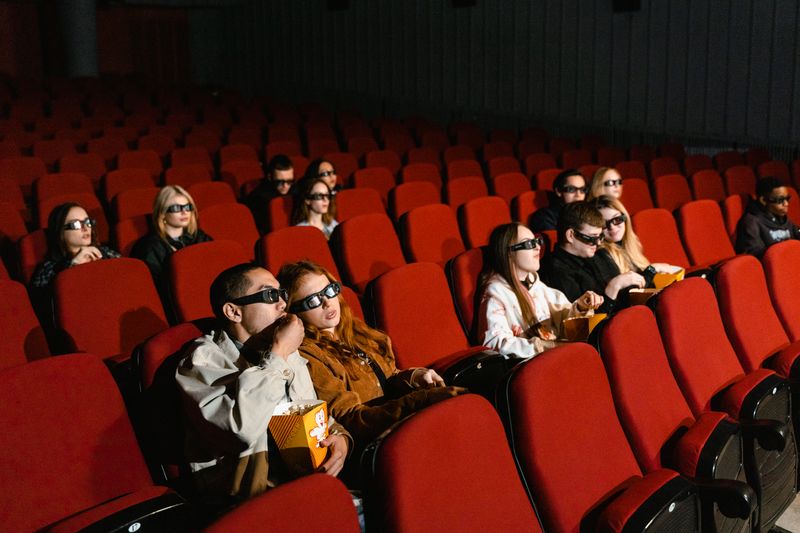
People routinely name films from a fairly short stretch of their lives as the ones that shaped what they now look for. That window usually falls somewhere between late childhood and early adulthood, which is when viewing becomes both unsupervised and socially loaded. Watching something at that age is rarely a private act, since it is bound up with who chose it and who else was present.
The film arrives alongside a set of circumstances, and the memory afterwards preserves both of them fused together. Attempts to separate the two later almost always fail, which is why these judgements resist argument so effectively.
Why the timing matters more than the film
The same title encountered a decade later is processed by someone who already has a framework for placing it. A framework makes a work comparable, and comparison is precisely what stops something from feeling unprecedented. Formative viewing happens before that framework is dense, so a film can occupy a category on its own with nothing beside it.
Here is what the choice buys: occupying a category alone is enormously advantageous, because everything encountered afterwards gets measured against it rather than the reverse. This is a structural advantage rather than a quality one, and it explains a great deal of otherwise puzzling loyalty.
Seeing something too early
A large share of formative experiences involve material the viewer was not really old enough to process comfortably. The confusion or discomfort is part of what fixes the memory, because unresolved impressions get revisited more often than settled ones.
On a second viewing, some of these encounters are genuinely unpleasant and are still described afterwards as important, which is not a contradiction. What made them stick was the gap between what was shown and what the viewer had the equipment to understand. Returning as an adult often closes that gap and, in doing so, dissolves some of the power the memory carried.
The social component
Films watched with a group at a formative age acquire the group's response as part of their content permanently. A moment that produced a collective reaction in a room becomes inseparable from the memory of the film itself.
Structurally, this is why watching alone later can feel like something is missing, and the missing element is not on screen. It also explains why recommendations from that period carry unusual weight, since they came bundled with belonging.
The film functioned as a token of membership as much as a piece of work being assessed on its own terms.
What this does to later viewing
Adults tend to keep searching for the specific sensation their formative viewing produced, often without recognising that this is what they are doing. Work that resembles the template gets an easier reception, and work that does not gets held at a slight distance.
By the middle of the season, this is not stubbornness, since the template was built when the equipment for building templates was at its most receptive. It does mean that a stated preference is frequently a description of one period rather than of a considered position. Noticing the pattern makes it easier to give something unlike the template a fairer hearing.
Production stories are told by people with an interest in how they sound.
Whether the effect can be countered
The template can be widened, though it takes deliberate effort and a willingness to sit with material that does not immediately reward you. The most reliable method appears to be repeated exposure rather than argument, since familiarity is what built the original template. Watching in company also helps, because the social component that fixed the early films is available to any age.
Here is what the choice buys: none of this erases the formative window, and there is little reason to want it erased in the first place. The useful move is knowing where your measuring stick came from, so you can tell when you are using it.
The takeaway
Ask where your measuring stick came from before you use it on something new.
Notice what is kept out of frame. That is usually where the decision was made.
Questions readers ask
Why do people defend childhood favourites so fiercely?
Because the memory includes the circumstances of watching, not just the film. An attack on the film reads as an attack on the situation it is fused with.
Can adults still have formative viewing experiences?
Yes, though they are rarer. They tend to require an unfamiliar mode or context, since a well-stocked framework makes most new work comparable to something already known.
Also by Omkar Vaidya
- Why the ninety-minute film and the eight-episode series pull the same story into different shapesFilm & Screen
- Teal and orange: how one colour decision became the default look of modern filmFilm & Screen
- The frame is a decision: what an aspect ratio does to what you noticeFilm & Screen
- What a screen test is actually testing, and why chemistry cannot be cast on paperFilm & Screen