Film & Screen
The first assembly is always too long, and that is exactly what it is for
The editor's first pass puts every shot in script order and runs far beyond the finished length. It exists to be cut, and what gets removed is the film.
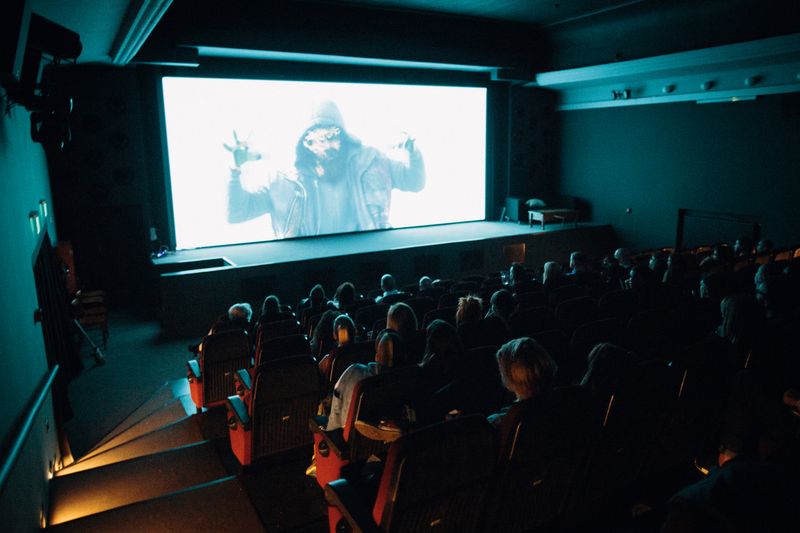
Both approaches to the first assembly cut work. What differs is what they cost you, and the cost is what this sets out.
The difference in one place
- An assembly includes everything shot, so it routinely runs an hour or more over the target.
- Cutting length usually means cutting whole scenes rather than trimming inside them.
- Editors work from dailies during the shoot, so the assembly exists within days of wrap.
What an assembly actually is
The editor begins cutting during production, working from each day's footage rather than waiting for the shoot to finish. By the end of principal photography there is a complete version in script order containing the preferred take of every setup. That version is long by design, because nothing has yet been judged for pace and every scene is present at its full written length.
An assembly running an hour over the intended length is entirely normal and says nothing about the material's quality. It is the first time anyone can watch the film as a film, which makes it the most informative object in the whole process.
Why length comes out in scenes, not seconds
Trimming a few frames from every cut across a film recovers surprisingly little time and damages rhythm across the board. Removing a whole scene recovers minutes at once and often improves pace, because the surrounding scenes gain adjacency.
The scenes that go are usually the ones that repeat information the audience has already inferred from performance. Editors call this discovering what the film can carry, and it is why a beautifully written scene can be cut without regret. The general rule is that if the following scene still makes sense, the preceding one was explaining something unnecessary.
The editor as first honest audience
An editor is the only person who watches the material without having been present for its creation, which makes their reaction diagnostically valuable. They do not know that a shot took eleven hours, and the film does not know either, so the cut treats every shot equally.
That neutrality is the reason directors traditionally leave editors alone for a first pass rather than supervising it. The subsequent director's cut then reintroduces intention, and the negotiation between the two versions produces most of the value. Editors who describe their job as protecting the audience are describing this exactly.
Structure moves, not just length
Assemblies frequently reveal that the script's order is not the film's best order, and scenes get relocated wholesale. A revelation held back on the page can prove more effective early, or a flashback can turn out to be unnecessary once performance carries the history.
These moves are cheap in an edit and impossible anywhere else, which is why the edit is genuinely a writing stage. Voiceover is often added at this point to bridge structure changes, and it is added far more often than audiences assume.
A film that feels differently organised from its script is normal rather than evidence that anything went wrong.
Where scenes tend to die
Openings lose the most, because assemblies typically start well before the point at which the finished film should begin. Transitional material dies next, since travel, arrival and greeting scenes are almost always removable without loss. Explanatory dialogue is cut heavily once the editor sees how much the audience already understands from the images.
Structurally, subplots involving secondary characters are the most common casualty of a length target, which is why supporting roles shrink in the edit. Performers discovering their part reduced is a routine occupational reality rather than a slight, and most understand it as such.
What reaches an audience has passed through hands that nobody lists.
What survives the process
The finished film is the assembly minus everything that could be removed without breaking it, which is a stringent definition. That is why the deleted scenes on a release rarely feel like losses: they were removed because the film stood without them.
Structurally, occasionally something essential is cut in pursuit of length, and the result is a film that feels rushed rather than tight. The distinction between tight and rushed is entirely about whether the audience can still infer what was removed. A good edit removes what you can reconstruct and keeps what you cannot.
Side by side
| Consideration | What it means in practice |
|---|---|
| What an assembly actually is | An assembly includes everything shot, so it routinely runs an hour or more over the target. |
| Why length comes out in scenes, not seconds | Cutting length usually means cutting whole scenes rather than trimming inside them. |
| The editor as first honest audience | Editors work from dailies during the shoot, so the assembly exists within days of wrap. |
The takeaway
The finished film is defined by what could be removed without it collapsing.
Notice what is kept out of frame. That is usually where the decision was made.
Questions readers ask
Is the assembly the director's cut?
No. The assembly is the editor's first complete pass. The director's cut comes afterwards and reflects the director's intentions applied to that material.
Why do deleted scenes look unfinished?
Because they were removed before colour, sound and effects work was completed on them, so nobody spent money finishing material that would not ship.
Also by Omkar Vaidya
- Why the ninety-minute film and the eight-episode series pull the same story into different shapesFilm & Screen
- Teal and orange: how one colour decision became the default look of modern filmFilm & Screen
- The frame is a decision: what an aspect ratio does to what you noticeFilm & Screen
- What a screen test is actually testing, and why chemistry cannot be cast on paperFilm & Screen