Film & Screen
The moment when everyone watched the same thing at once is now rare and engineered
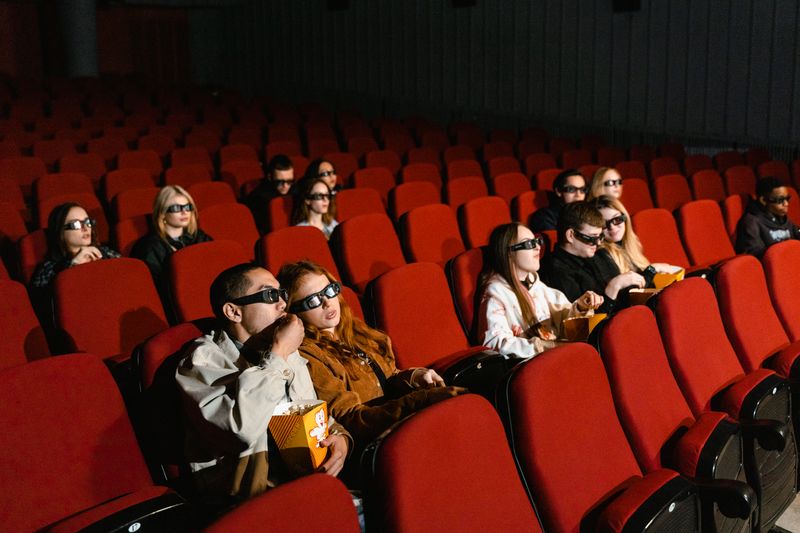
Shared cultural events used to be a side effect of how distribution worked. They now have to be manufactured deliberately, and the manufacture is visible.

What follows is an argument about simultaneous cultural moments, and about where the received version of it stops being true.
The argument in brief
- Synchronised audiences were produced by scarce distribution, not by shared taste.
- Abundance desynchronises viewing, which changes what a conversation about culture can assume.
- Deliberate events work by adding scarcity back in, usually through timing or exclusivity.
Synchronisation was an accident of supply
For most of broadcasting history, audiences watched the same things simultaneously because very few alternatives were available at any given hour. That produced an enormous shared experience which was widely mistaken for a shared taste rather than a shared constraint. The constraint disappeared as choice expanded, and the shared experience disappeared with it in fairly short order.
What remains is a genuine memory of collective viewing which is regularly attributed to a cultural quality that never existed. The correct explanation is scarcity of supply, which nobody feels nostalgic about when it is described that way.
Why abundance desynchronises
When everything is available permanently, each viewer arrives at a title on their own schedule and finishes it whenever they choose. That makes a shared conversation almost impossible, since no two participants are reliably at the same point in the same thing. Discussion consequently fragments into much smaller groups organised around specific titles rather than around a common schedule.
Those groups are often more engaged than a mass audience ever was, which is a real gain alongside a real loss. The loss is the ability to reference something and assume the room knows what you mean.
Manufactured events
Deliberate cultural moments work by reintroducing scarcity, usually through a fixed time, a limited window or a single location. Live broadcasts, weekly releases and cinema-only periods all do this, and each is a decision to trade convenience for synchronisation. The trade is often worth it, since a synchronised audience generates conversation that a desynchronised one cannot.
Audiences can see the manufacture clearly and mostly participate anyway, because the shared experience is genuinely valuable to them. Visibility of the mechanism does not appear to reduce its effectiveness at all.
Spoiler etiquette as a symptom
The elaborate social rules that now surround discussing plot details are a direct consequence of desynchronised viewing. Such rules were barely necessary when everyone watched at the same time, since there was no gap to protect. They are now an ongoing negotiation with no settled answer, and the disagreements about them are essentially about timetables.
Different communities land in very different places, and the absence of any general standard is what produces the friction.
The etiquette is not fussiness so much as the visible cost of everyone watching on their own clock.
What conversation looks like now
Cultural conversation has shifted from a single large discussion to many overlapping ones with different memberships and different reference points. That makes it harder to say what anything means generally and much easier to find people who care about the same specific thing. It also means claims about what everyone is watching should be treated sceptically, since almost nobody now shares a viewing schedule.
The impression of a monoculture usually reflects the particular set of conversations someone happens to be inside. Stepping outside that set is a quick way to discover how partial any such impression is.
Budget and streaming figures are rarely audited and frequently strategic.
Whether it comes back
Live events remain genuinely synchronised and are one reason services have pursued them so persistently. Weekly release schedules have also returned in places, which is an explicit attempt to rebuild a shared clock. Neither reproduces the scale of a period when there was nothing else on, because that condition cannot be recreated.
On the call sheet, what is achievable is synchronisation within a large community rather than across an entire population. That is a different thing and it is probably the most that abundance permits.
The takeaway
Everyone watching the same thing was a supply constraint, not a shared taste.
The premise gets you in. The structure decides whether you stay.
Questions readers ask
Was the shared culture better?
It was broader and considerably less chosen. What replaced it is narrower per conversation and far more engaged within each one, which is a trade rather than a decline.
Why did weekly releases come back?
Because they manufacture a shared clock. A synchronised audience produces sustained conversation, which is difficult to generate when everyone watches at a different pace.
Also by Reshma Qureshi
- Reshoots are ordinary film-making, not a distress signalFilm & Screen
- Documentary gets written in the edit because nobody could write it in advanceFilm & Screen
- What a music supervisor does, and why one song in one scene costs what it costsMusic
- Song introductions got shorter, and the incentive that shortened them is measurableMusic