Music
A live album is a recording of a live event, which is not the same thing
Concert records sit somewhere between documentary and studio production, and where any particular one sits is almost never stated on the sleeve.
This works through live recordings and their construction in the order the parts actually depend on each other.
The short version
- Most concert recordings are multitracked and mixed afterwards, exactly like studio material.
- Audience sound is usually captured separately and balanced as its own element.
- Overdubbing and multi-night selection are both long-standing and rarely disclosed.
What is actually captured
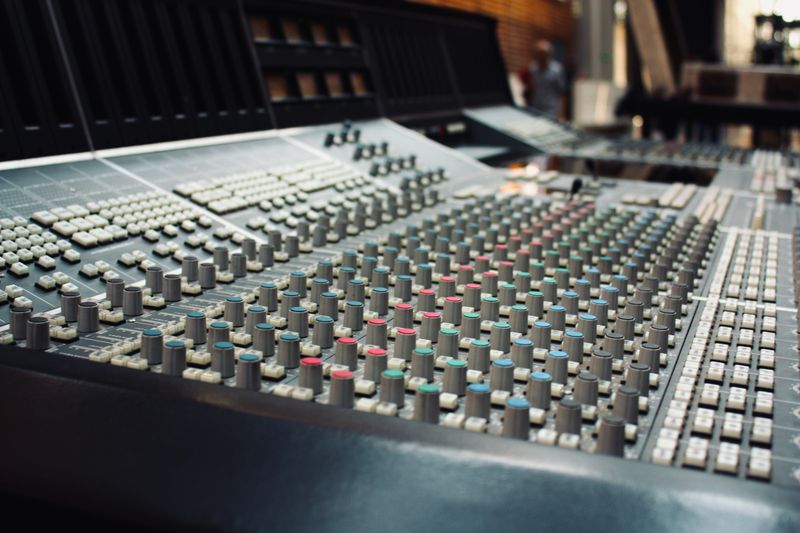
A concert recording usually takes a separate feed from every microphone and instrument, producing a multitrack session rather than a finished stereo mix. The mix that audiences heard in the room is not that recording, since a hall mix compensates for acoustics that the multitrack does not contain.
That means a live album is mixed afterwards from scratch, with all the same decisions a studio record requires. Audience microphones are placed around the venue and treated as their own instrument, brought up between songs and pushed down during them. The crowd you hear is therefore a mixed element with a level, not an unavoidable property of the recording.
The repair spectrum
At one end sit recordings released essentially as performed, with mixing but no substitution of any performance. At the other sit recordings where substantial parts were re-recorded afterwards to correct problems, sometimes including lead vocals.
In the mix, in between lies multi-night selection, where the released version of a song is the best of several performances across a tour. All three practices are long-established, and none is generally disclosed on the packaging. The honest position is that a listener cannot usually tell which they have, which is worth knowing before arguing about authenticity.
Why live recordings sound different
A stage has bleed: every microphone picks up everything else, so instruments cannot be isolated the way a studio isolates them. That bleed is why live mixes often sound wider and less separated, and why they resist the surgical adjustments a studio mix permits. Room reverberation is baked in and cannot be removed, which fixes the apparent space of the recording before mixing starts.
Performances are also faster and louder than studio versions, because a room's energy reliably pushes tempo upward. Those differences are the actual appeal for many listeners, and they are properties of the situation rather than choices.
Why bands release them
Live albums historically served contractual and catalogue purposes as much as artistic ones, filling obligations without a writing cycle. They also document arrangements that have evolved on tour, which can differ substantially from the recorded versions. For some artists the live arrangement is the definitive one, and the studio version is the sketch that preceded it.
Structurally, there is an archival function too, since a touring band's line-up and approach at a given moment is otherwise unrecorded.
Those motives are all legitimate, but they produce very different records, which is why the format is so uneven.
The audience as an instrument
Crowd noise carries information: it tells a listener which songs are known, where the room recognised an introduction, and how big the space is. Mixers use it structurally, letting applause carry transitions and using its decay to control the pace between tracks. Too much crowd makes a record feel distant, and too little makes it feel like a studio session with clapping edited on.
In the mix, recordings that fade applause abruptly between tracks generally do so because the songs came from different nights. Listening for that fade is one of the few reliable clues to how a live album was assembled.
Judging one fairly
Ask whether the record documents an event or presents a performance, since those are different intentions with different standards. Look for arrangement differences from the studio versions, which is where a live album justifies its existence.
In the mix, notice how the sequence works, because a concert has a shape and a good live album preserves or improves it rather than ignoring it. Be sceptical of arguments about overdubs in the absence of information, since the practice is common and rarely documented. The interesting question is what the live setting made possible, not whether every note was captured in one room on one night.
The takeaway
A live album is a production decision about a live event, not a transcript of one.
The premise gets you in. The structure decides whether you stay.
Questions readers ask
Are audience sounds ever added?
Crowd levels are certainly mixed, and applause is routinely edited between tracks. Wholly synthetic audiences are unusual on major releases but the practice is not documented either way.
Why do live versions sound faster?
Performers reliably speed up in front of an audience, and monitoring conditions on stage make small tempo drift harder to notice than in a studio.
Also by Reshma Qureshi
- Reshoots are ordinary film-making, not a distress signalFilm & Screen
- Documentary gets written in the edit because nobody could write it in advanceFilm & Screen
- What a music supervisor does, and why one song in one scene costs what it costsMusic
- Song introductions got shorter, and the incentive that shortened them is measurableMusic