How It Is Made
Lighting Is Mostly Deciding What The Audience Will Not See
A lighting setup is defined as much by what it leaves dark as by what it illuminates, and the choices about concealment do more narrative work than the visible light.
Lighting is usually described in terms of illumination. Practically it is a subtractive discipline, and the decisions with the greatest effect concern what is being kept out of view.
Darkness directs attention more efficiently than light
The eye goes to the brightest area in a frame, so controlling brightness controls where an audience looks without any conscious effort on their part.
Reducing light elsewhere is generally more precise than adding light to the subject, since it removes competing points of interest entirely.
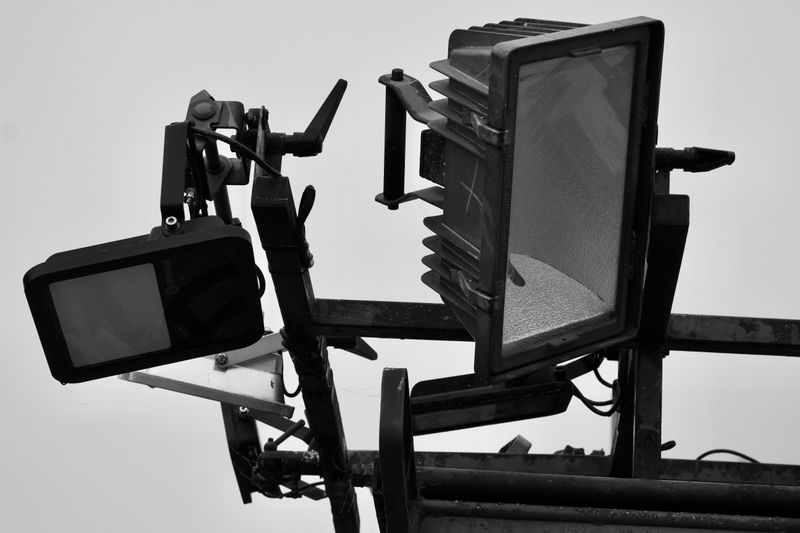
This is why so much on-set equipment exists to block and shape rather than to emit. Flags, nets and screens are the tools of the actual decision.
What is hidden is often what could not be built
Sets are constructed only where the camera will see, and lighting is arranged so that the boundary falls outside what is legible.
A room that appears to extend beyond frame may end a metre away, with darkness performing the extension that construction did not.
The same principle covers modern intrusions on location, where an unwanted feature is simply not lit and therefore does not exist in the shot.
Contrast carries tone before any content does
A scene lit with a small difference between bright and dark reads as open and unthreatening. A scene with deep shadow adjacent to bright areas reads as tense.
Audiences respond to this before they process what is happening, which makes it the fastest tonal instrument available to a production.
Consistency matters more than any individual setup, because a change in contrast between scenes is read as meaningful whether or not it was intended.
Sources have to be justified or the room feels wrong
Viewers unconsciously track where light in a scene is supposedly coming from, and an image with no plausible source is perceived as artificial even when it is attractive.
Cinematographers therefore establish visible sources within the set and build the actual lighting to be consistent with them, often using far more equipment than the apparent source implies.
Where a scene deliberately abandons plausible sources, it usually does so at a moment when the film has already left realism, and the audience accepts it for that reason.
The schedule is the constraint that shapes the look
Lighting takes time, and a day contains a fixed number of setups. A complex arrangement in one scene means a simpler one elsewhere.
Crews therefore design for reuse, lighting a whole space so that several angles can be shot without rebuilding, which trades precision for pace.
Much of what distinguishes a film's look from a fast television schedule is this trade rather than skill or equipment, and it is decided in scheduling meetings before anyone reaches the set.
Questions readers ask
Why do so many films use the same cities?
Incentives, established crew bases and cooperative permitting. A city with an experienced film office and available crew is far cheaper to shoot in than an unfamiliar one.
Can a production film without permission?
Rules vary by jurisdiction, and some places allow small unobtrusive filming. Any production of scale needs permits and insurance, and shooting without them creates serious legal exposure.
Also by Trisha Bhandari
- Procedurals outlive prestige dramas for reasons that have nothing to do with qualityTelevision
- The bottle episode began as a budget measure and became a writing exerciseTelevision
- A spin-off is not a sequel, and confusing them explains why so many failTelevision
- Why a film mix sounds wrong on a phone, and what the mixers were actually doingHow It Is Made