How It Is Made
Screen Rain And Snow Are Plumbing Problems First
Weather on camera is built by special effects crews using water systems, wind machines and light, and the difficulty is repeatability rather than making it look convincing once.

Rain, snow and wind on screen are almost never the weather that happened to occur. They are constructed by a special effects crew, and the hard part is doing it identically twice.
Real rain does not photograph
Falling water is nearly invisible on camera without light behind it. Natural rain in flat daylight registers as nothing more than wet pavement and unhappy performers.
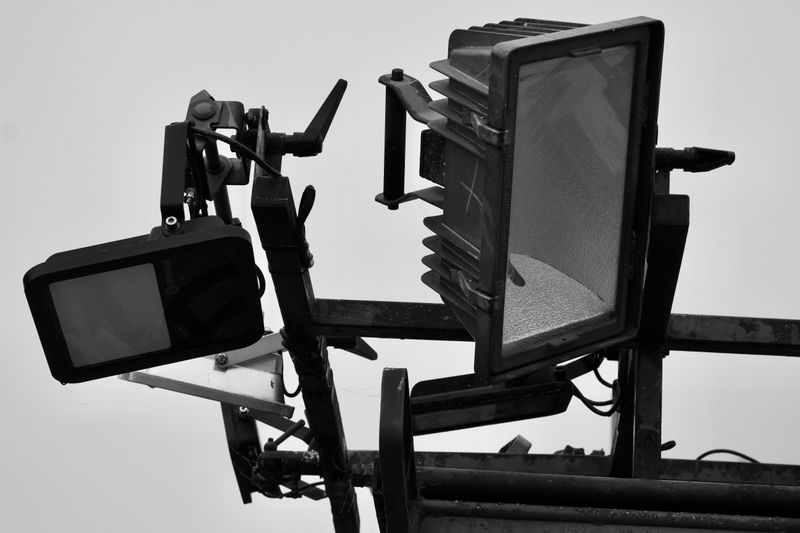
Effects rain is therefore built with backlight, because the droplets have to catch a source pointed roughly toward the lens to appear at all.
That requirement dictates the lighting plan for the entire scene, which is why a rain sequence is expensive even when the water itself is straightforward.
Water has to be supplied, contained and recovered
Rain towers and bars need pressurized supply at volume, which on location means tankers, pumps and hose runs that take hours to set before anything is shot.
The water then has to go somewhere. Drainage, run-off and the property owner's tolerance for a soaked location are practical constraints that shape where scenes can happen.
Crews also warm the water where performers are exposed to it repeatedly, since a full shooting day in cold rain is a safety issue rather than a comfort question.
Continuity is the real difficulty
Coverage means shooting the same moment several times from different angles. The rain must fall at the same intensity, and clothing must be at the same stage of wetness, in every take.
Once an actor is soaked they cannot be unsoaked quickly, so wardrobe carries duplicates and a crew member is dedicated to resetting the level of dampness between takes.
This is why a scene that reads as one downpour is usually the most tightly controlled environment on the schedule.
Snow is a materials choice with tradeoffs
Falling snow is typically produced from foam or paper products chosen for how they drift, while ground cover uses entirely different materials selected for how they hold shape underfoot.
Each option balances appearance, cleanup and whether performers will be breathing near it, and productions frequently combine several within a single frame.
Wind machines then have to be balanced against the falling material, because too much air turns a snowfall into a blizzard the scene did not call for.
Digital work does not remove the physical setup
Weather can be added in post, but interaction cannot be faked cheaply: wet hair, splashes, reflections and how performers move all read as wrong when the ground is dry.
Productions commonly shoot practical water near the performers and extend the storm digitally beyond them, which keeps the believable part real and the expensive part virtual.
The division of labor is decided long before shooting, because the effects crew and the visual effects supervisor have to agree on where one hands off to the other.
Questions readers ask
Why do so many films use the same cities?
Incentives, established crew bases and cooperative permitting. A city with an experienced film office and available crew is far cheaper to shoot in than an unfamiliar one.
Can a production film without permission?
Rules vary by jurisdiction, and some places allow small unobtrusive filming. Any production of scale needs permits and insurance, and shooting without them creates serious legal exposure.
Also by Trisha Bhandari
- Procedurals outlive prestige dramas for reasons that have nothing to do with qualityTelevision
- The bottle episode began as a budget measure and became a writing exerciseTelevision
- A spin-off is not a sequel, and confusing them explains why so many failTelevision
- Why a film mix sounds wrong on a phone, and what the mixers were actually doingHow It Is Made