How It Is Made
The Script Supervisor Holds The Only Continuous Memory On Set
One person tracks what was shot, how it matched and what remains missing, and without that record the edit would discover its gaps only after everyone had gone home.

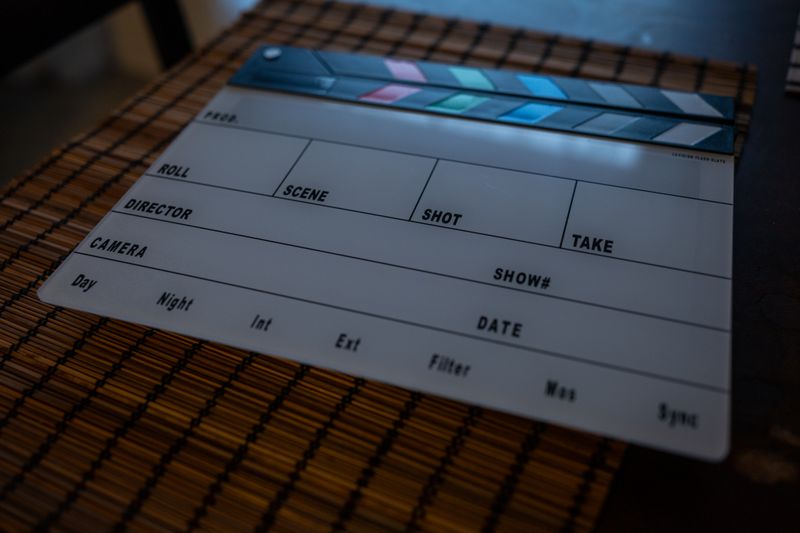
Among the departments on a set, one role exists to remember. The script supervisor maintains the record that makes an out-of-order shoot assemblable afterwards.
The record is made in real time and cannot be reconstructed
During shooting, this person notes which lines were covered in each take, which take the director preferred, the lens used, and how the action was performed.
None of that is recoverable later at reasonable cost. Reviewing hours of footage to establish what exists would consume more time than the shoot itself.
The notes therefore travel to the edit as the index to the material, and their quality determines how quickly an editor can find anything.
Matching is checked against the previous take, not the script
Continuity errors arise because performers repeat action slightly differently, and small differences become visible when two takes are cut together.
Which hand held an object, how far a drink was drunk and where a character was standing at a line all have to be consistent across every angle.
The script supervisor watches for these during takes and intervenes before the crew moves on, because fixing it later means either a reshoot or an edit that avoids the shot.
Coverage gaps are the more serious risk
A scene needs enough angles to be cuttable, including material that lets the editor move between performers and shorten the scene if required.
Tracking which parts of a scene have been covered from which angles is a running calculation, and it is the script supervisor who knows when something is missing.
Raising it before the set is struck is the entire value. Once the location is released, an uncovered moment becomes a permanent constraint on the edit.
Timing feeds the schedule and the running time
Scenes are timed as they are performed, which produces an estimate of the film's length long before an edit exists.
That figure matters commercially, since a production discovering late that it is substantially over length has fewer options than one that knew during shooting.
The same timings inform daily scheduling, indicating whether the day's work is achievable in the hours remaining.
Script changes have to be recorded as they happen
Dialogue is altered on set constantly, and the version performed is frequently not the version on the page.
The supervisor records what was actually said, which becomes the reference for later dubbing, subtitling and any dialogue that must match in a subsequent scene.
Without that record, departments working after the shoot would be reconciling a script against footage that no longer follows it, which is a slow and error-prone way to discover the film.
Questions readers ask
Why do so many films use the same cities?
Incentives, established crew bases and cooperative permitting. A city with an experienced film office and available crew is far cheaper to shoot in than an unfamiliar one.
Can a production film without permission?
Rules vary by jurisdiction, and some places allow small unobtrusive filming. Any production of scale needs permits and insurance, and shooting without them creates serious legal exposure.
Also by Trisha Bhandari
- Procedurals outlive prestige dramas for reasons that have nothing to do with qualityTelevision
- The bottle episode began as a budget measure and became a writing exerciseTelevision
- A spin-off is not a sequel, and confusing them explains why so many failTelevision
- Why a film mix sounds wrong on a phone, and what the mixers were actually doingHow It Is Made