Music
A scene needs three things before it becomes a genre, and a venue is usually one of them
Music does not spread evenly outward from a single act. It concentrates first in a small number of physical places, and the shape of those places leaves marks.

Treat the sections below as a sequence. With how music scenes form, getting the early decisions right makes the later ones much easier.
Before you start
- A scene needs a room, a reason for musicians to meet repeatedly, and someone documenting it.
- The physical constraints of a venue shape the music written to be played in it.
- Scenes are usually named from outside, and the name arrives after the sound has already formed.
Proximity does the early work
A scene begins when a group of musicians end up in the same rooms often enough to hear each other's unreleased and unfinished work. That repeated contact accelerates everything, because an idea tried on a Tuesday can be borrowed, argued with and improved by the weekend.
Recorded influence travels too, but it arrives finished and polished, which makes it considerably harder to take apart and learn from. Watching something fail in a half-empty room teaches a musician more than hearing the successful version of it on a record. This is why scenes still cluster geographically long after the technology to collaborate remotely became entirely ordinary.
The room shapes the music
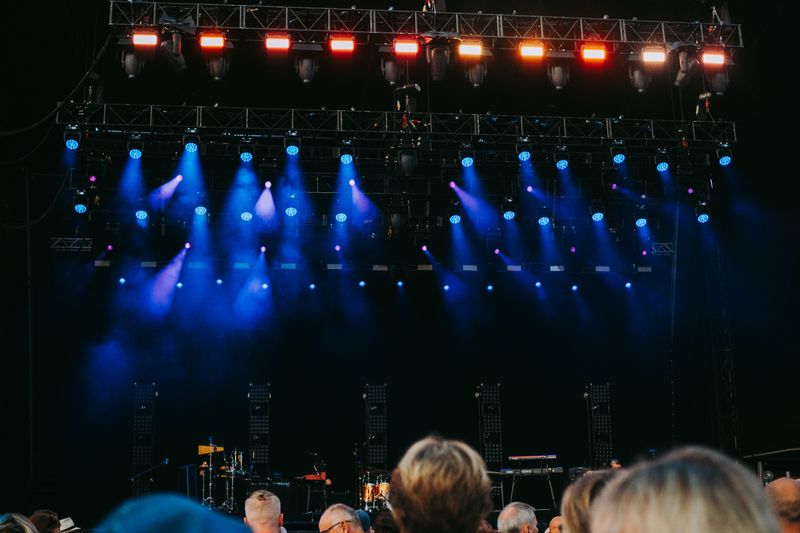
A venue has a size, a ceiling, a stage width and an acoustic character, and music written for it adapts to all of them. Small rooms with poor separation favour arrangements that stay legible when everything smears together, which pushes players toward fewer simultaneous parts.
Larger rooms reward the opposite, and bands that grow into them frequently rewrite their existing material to fill the extra space. Even the load-in affects the sound, because a venue reached by a narrow staircase quietly limits what equipment anyone bothers bringing. None of this is stylistic intention, but it accumulates into something an outside listener eventually hears as a deliberate style.
Somebody has to be writing it down
Scenes that leave a trace almost always contained at least one person recording, photographing, promoting or simply cataloguing what was happening. Without that documentation a scene can be locally significant and then vanish entirely, because there is nothing for anyone later to point at.
The documenter is frequently a participant rather than an observer, which shapes what gets preserved and what quietly does not. That partiality is worth remembering, since the surviving account of any scene is usually one faction's version of events. Historians of popular music spend a great deal of their effort correcting for exactly this kind of distortion.
Naming happens from outside
Musicians inside a scene rarely name it, because from the inside it looks like a group of dissimilar acts who happen to share a bill. The name generally arrives from a writer, a shop, a label or a listener trying to describe a set of records efficiently.
Structurally, that external label is a compression, and the acts inside it often object to being compressed in exactly that particular way. The objection is usually correct and entirely futile, because the name is doing work the musicians cannot do for themselves.
Once the label exists it starts attracting new acts who make music to fit it, which is when the scene changes character.
The moment a scene stops being local
Attention from outside brings money, opportunities and audiences, all of which are useful and all of which dissolve the original conditions. Musicians who succeed leave, venues that hosted the early shows get priced out, and the informal contact driving the whole thing thins out. New arrivals come for a sound that already exists rather than to build one, which shifts the scene from making to reproducing.
Structurally, this arc repeats often enough across different places and decades that it should be treated as structural rather than as a moral failing. The interesting question is not why scenes end but why the productive stage lasts as long as it does.
What survives afterwards
What outlasts a scene is usually a handful of records, a few venue names and a set of stylistic habits that spread outward. Those habits get adopted by musicians who never attended any of the shows, which is how a local sound becomes a general one.
Here is what the choice buys: in the process it loses the context that explained it, so later listeners hear circumstantial choices as pure aesthetic preferences. That is not quite a loss, since the music still works, but it does make the history considerably harder to read backwards. Understanding the rooms tends to explain more about a sound than any account of individual intention ever does.
The takeaway
Look for the room before you look for the influences; it usually explains more.
Notice what is kept out of frame. That is usually where the decision was made.
Questions readers ask
Can a scene exist entirely online?
Communities plainly form online, but the tight feedback loop of hearing unfinished work in a room is hard to reproduce. Online scenes tend to spread faster and cohere less.
Why do musicians dislike the genre names they get?
Because the name describes a set, and each act experiences itself as a specific case. The label is useful to listeners and reductive to the people inside it.
Also by Sanjeev Pillai
- Records got louder for thirty years, and the reason was competition rather than tasteMusic
- A record producer is doing four different jobs and the credit does not distinguish themMusic
- The vocal you love was assembled from thirty takes, and that is normal practiceMusic
- Mastering is not making it louder, and the confusion costs musicians moneyMusic