Television
The Studio Audience Is A Timing Instrument
A live audience at a comedy recording provides performers with the response information a scene needs, which is why the format persists despite the difficulty of shooting around it.

Recording comedy in front of an audience is expensive and constrains everything about how a scene can be shot. It survives because the audience supplies something the format cannot manufacture.
Comedy timing requires a response to time against
A performer delivering a line needs to know how long to wait before the next one, and that interval depends entirely on how the room reacts.
Without an audience the interval must be guessed, and the guess is made without the information that would determine it.
This is why performers experienced in front of audiences often describe playing to an empty set as working in the dark. The instrument they calibrate against is absent.
The audience is also the writers' measurement
Material is rewritten during a recording session, sometimes between takes, on the basis of what the room did and did not respond to.
That feedback is immediate and specific, identifying not just which jokes failed but where in a line the failure occurred.
No other television format gets information at that resolution during production, which is why multi-camera comedy scripts improve so markedly across a recording night.
The staging cost is severe
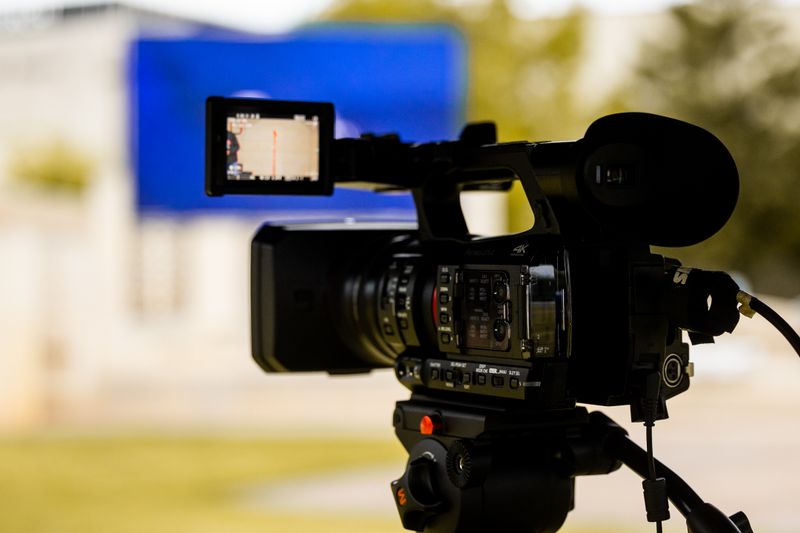
An audience must see the action, which fixes the sets along one wall, removes one side of every room and rules out most camera positions.
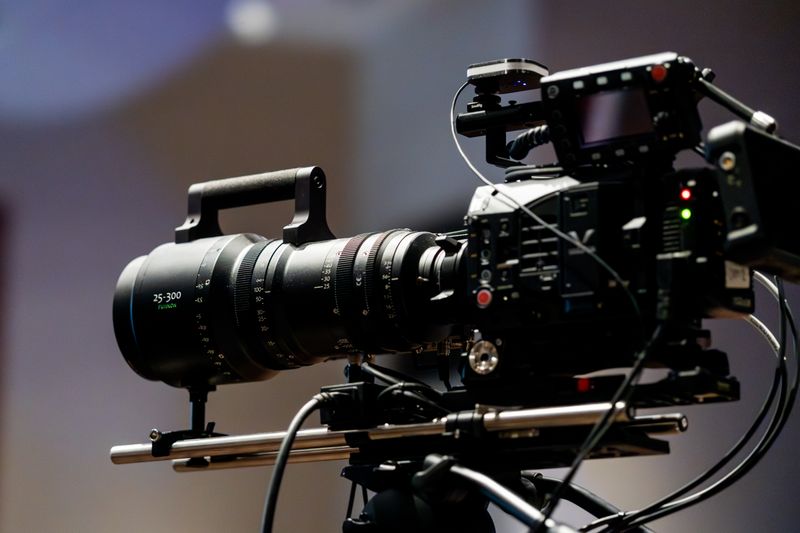
Scenes are consequently shot with several cameras simultaneously from a limited arc, and the visual language is flatter than single-camera production allows.
Everything about the look of these shows follows from sightlines. The aesthetic is a consequence of the audience rather than a stylistic choice.
Recorded laughter is a different and older device
Adding laughter to material recorded without an audience solves a presentational problem while providing none of the timing information.
Its historical purpose was partly to substitute for the shared reaction of watching with other people, on the reasonable theory that comedy is social.
It became disliked when it was applied to material whose rhythm had not been built around it, producing responses in places no room would have laughed.
The format persists in the places that need it most
Comedy built on rapid verbal exchange benefits most from live response, and that style continues to be recorded in front of audiences.
Comedy built on discomfort or observation works against it, since a laugh in the wrong place undermines the effect, and those shows moved to single-camera production.
The split is therefore not about which approach is more sophisticated. It reflects whether a show's jokes need a room to land in or need silence to sit in.
Questions readers ask
Why do some shows improve in season two?
Usually because the first season was spent building the world and the second can use it. Shows that front-load setup gain most from having it behind them.
Does a longer gap between seasons help?
It helps the writing and hurts the audience relationship. Longer gaps allow proper development but risk viewers not returning, which is a commissioning trade-off rather than a creative one.
Also by Sanjeev Pillai
- Records got louder for thirty years, and the reason was competition rather than tasteMusic
- A record producer is doing four different jobs and the credit does not distinguish themMusic
- The vocal you love was assembled from thirty takes, and that is normal practiceMusic
- Mastering is not making it louder, and the confusion costs musicians moneyMusic