Music
A cover version can replace the original in public memory, and usually does it the same way
Plenty of famous recordings are not the first ones. What decides which version people remember follows a pattern that has little to do with which came first.
Most explanations of cover versions stop at the point where it starts to matter. This one carries on.
The short version
- The version most people hear first tends to become the reference version regardless of chronology.
- Covers that reinterpret rather than reproduce are the ones most likely to displace an original.
- Displacement is about circulation, so the better-distributed version usually wins.
First heard beats first recorded
Listeners treat the version they encountered first as the real one, and everything afterwards gets heard as a departure from it. That ordering is entirely accidental and depends on when a person was born and what was circulating around them. Chronology has almost no bearing on this, which is why so many people are surprised to learn a favourite recording was a cover.
The surprise is usually accompanied by a slight sense that the original is wrong, which is the reference effect operating. Nothing about either recording changed, and the whole difference is in which one arrived first.
Reproduction rarely displaces
A cover that closely reproduces an original gives listeners no reason to prefer it, since the original already does that job. Displacement almost always involves a genuine reinterpretation, meaning a change of tempo, instrumentation, register or emotional reading. The change gives the new version its own identity, which is what allows it to be remembered as a thing rather than as a copy.
It also frequently reveals something in the writing that the original arrangement had obscured or chosen not to emphasise. That revelation is the strongest argument for covering anything at all.
Circulation does the rest
Once a version has an identity, whether it displaces the original depends mostly on which one gets in front of more people. A cover attached to a widely distributed release, a screen placement or a persistent live performance accumulates exposure the original may not have had. Originals recorded by acts with limited distribution are especially vulnerable to this, and the history of popular music is full of examples.
The rights position means the writer generally benefits regardless of which recording succeeds, which is a genuine protection. The performer on the original recording has no equivalent protection, which is a much less comfortable arrangement.
Live performance as displacement
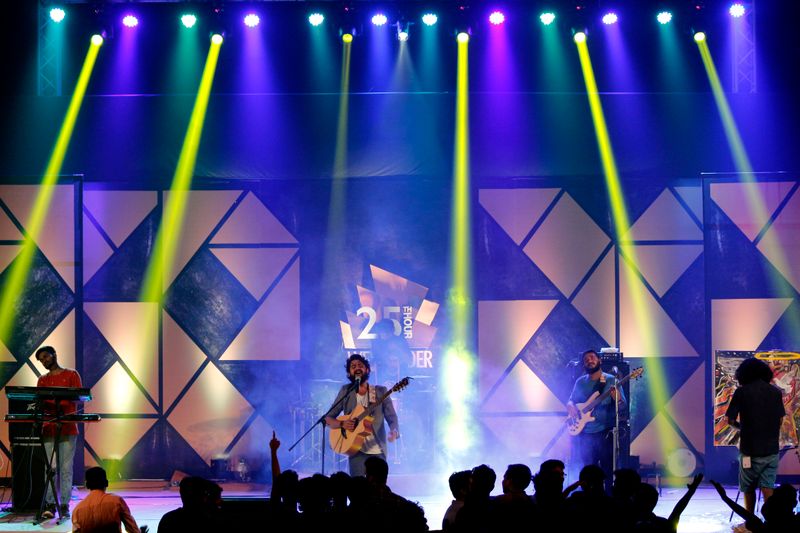
A song performed constantly by one act becomes associated with that act even when the recording history says otherwise. Audiences who encounter a song in a room will attach it to whoever was standing in front of them at the time.
This is a slow mechanism and an extremely durable one, since live memory is unusually resistant to correction. It is one reason acts continue performing material they did not write for decades without the association weakening.
The recording is a document and the performance is an event, and events are what people remember.
When a cover fails
Covers most often fail by reproducing the original's arrangement while lacking whatever specific quality made that arrangement work. They also fail by reinterpreting in a direction the writing cannot support, which exposes the mismatch rather than the song. A third failure is treating a song as a vehicle for demonstrating ability, which tends to obscure everything the writing was doing.
By the middle of the season, none of these are technical problems so much as decisions about what the covering act thinks the song is. Getting that reading right is most of the work, and it happens before anybody records anything.
Why it keeps happening
Covering is one of the oldest habits in music and predates recording entirely, since songs circulated as material rather than as fixed objects. Recording changed that by attaching a song to one definitive performance, which is historically a fairly recent idea.
Covers push back against that fixity and keep material in circulation across generations that would otherwise not encounter it. That circulation is genuinely valuable, and it is also how a great deal of writing credit ends up disconnected from public memory. Both things are true at once and neither cancels the other.
The takeaway
The version you heard first is the one you will defend, and that is an accident of timing.
Popularity and craft are two different measurements, and both of them are real.
Questions readers ask
Is a cover ever better than an original?
Better is not a useful frame here. Covers that displace originals usually do something different rather than something superior, and the difference is what earns them their place.
Do original artists lose out when a cover succeeds?
Writers generally continue to benefit through publishing arrangements. Performers on the original recording have no comparable protection, which is where the real asymmetry sits.
Also by Vaishnavi Rao
- The unbroken take is a scheduling problem long before it is a stylistic oneFilm & Screen
- Development hell is not one problem — it is six, and they take turnsFilm & Screen
- The second act is where films fall apart, and the reason is structuralFilm & Screen
- A soundstage and a location ask completely different things of an actorFilm & Screen