Music
The record became the advertisement and the room became the event
For most working musicians, the relationship between recordings and performance has inverted. That inversion changes what records are for.

The options around recordings and live performance are set out side by side below, with the conditions that genuinely favour one over the other.
The difference in one place
- Recorded music is now widely available at low marginal cost, while a room has fixed capacity.
- Scarcity moved from the recording to the performance, and value followed it.
- Records are increasingly made to establish a reason for people to attend something.
Where the scarcity went
For much of the last century a recording was a physical object that had to be manufactured, shipped and bought individually. That scarcity is what gave recordings their commercial weight, since access required a transaction for each copy. Streaming removed the scarcity almost entirely, because an additional listener costs essentially nothing to serve.
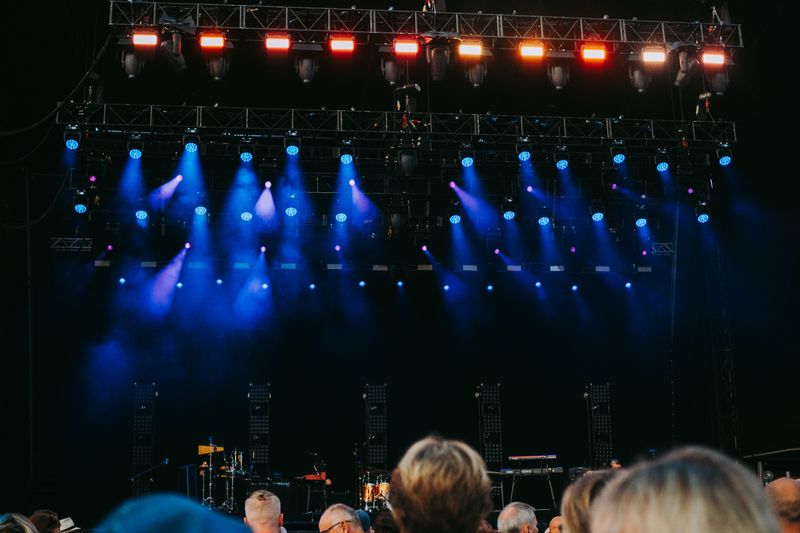
A room, by contrast, holds a fixed number of people and cannot be duplicated, which makes it the scarce thing now. Value tends to accumulate wherever scarcity sits, and it has moved accordingly.
What this does to records
A record increasingly functions as the thing that establishes why anyone would travel to see an act perform. That does not make records unimportant, since without one there is no reason for an audience to assemble at all.
It does change what a record is optimising for, which shifts toward material that will work in a room in front of people. Some acts have always written this way and others have not, and the pressure is uneven across different kinds of music. Studio-focused work is disadvantaged by the inversion in a way that is structural rather than aesthetic.
The touring burden
If performance is where the value sits, then musicians have to be physically present to access it, which is a demanding requirement. Touring involves travel, equipment, crew and time away, and none of those scale the way a recording does. This falls hardest on musicians without existing resources, since touring generally requires spending before earning anything back.
On the call sheet, it also disadvantages anyone for whom constant travel is impractical, which is a much larger group than the industry conversation usually acknowledges. The inversion therefore has a distributional effect that has little to do with the quality of anyone's music.
Why audiences pay for presence
A performance offers things a recording cannot, including the specific room, the specific night and the other people present. It is also unrepeatable, which is exactly the quality that a permanently available recording has lost. Audiences appear to value this genuinely rather than merely accepting it, and attendance has held up as a form of consumption.
The event is partly musical and partly social, and separating those two components is neither possible nor especially useful.
Understanding attendance as a social act explains a great deal about which performances sell and which do not.
The recording of the performance
Audiences now document performances extensively, which produces an enormous informal archive alongside the official one. This complicates the scarcity slightly, since a performance is no longer confined to the people who were present. What circulates afterwards is a poor substitute for attendance and an excellent advertisement for it, which is the useful outcome for musicians.
Attempts to prevent this documentation have generally failed and have tended to cost more goodwill than they protected. The more common response now is to accept it and shape what gets documented rather than to fight the behaviour.
What reaches an audience has passed through hands that nobody lists.
What has not changed
The underlying relationship between a musician and a room is old and has survived every technological change so far. Recording was an interruption in that history rather than the natural state of things, which is easy to forget. Treating the current arrangement as a decline assumes the recording era was the baseline, and it was not.
On a second viewing, it is nonetheless a real change in working conditions for musicians who built careers under the previous arrangement. Both the historical perspective and the immediate difficulty are legitimate, and neither answers the other.
Side by side
| Consideration | What it means in practice |
|---|---|
| Where the scarcity went | Recorded music is now widely available at low marginal cost, while a room has fixed capacity. |
| What this does to records | Scarcity moved from the recording to the performance, and value followed it. |
| The touring burden | Records are increasingly made to establish a reason for people to attend something. |
The takeaway
Scarcity moved from the copy to the room, and everything else followed it.
Popularity and craft are two different measurements, and both of them are real.
Questions readers ask
Are records still worth making?
Yes, because they are what gives an audience a reason to assemble. Their function has shifted from being the product to establishing the case for the performance.
Does this affect all musicians equally?
No. It falls hardest on those for whom constant travel is impractical or unaffordable, which is a distributional effect unrelated to the quality of the music.
Also by Reshma Qureshi
- Reshoots are ordinary film-making, not a distress signalFilm & Screen
- Documentary gets written in the edit because nobody could write it in advanceFilm & Screen
- What a music supervisor does, and why one song in one scene costs what it costsMusic
- Song introductions got shorter, and the incentive that shortened them is measurableMusic