Music
Festival Lineups Are Built From Routing And Radius Clauses
Booking a festival is a logistics and contract problem, and the exclusivity terms attached to appearances explain why acts vanish from a region for months around a date.

A festival lineup looks like a curatorial statement. It is largely the output of tour routing, competing offers and a contract clause most audiences never hear about.
Routing determines who is even available
Touring acts move across the country in a sequence dictated by geography and travel costs, and a festival can realistically book performers whose existing route passes nearby.
An act with no reason to be in the region must be paid to make the trip, which raises the fee substantially and often removes them from consideration.
Festival bookers therefore work backward from tour schedules, assembling a lineup from who will be within reach on a particular weekend.
Radius clauses buy exclusivity in space and time
Festivals commonly require that a booked act not perform within a defined distance for a defined period before and after the event.
The purpose is straightforward: a ticket buyer who could see the same performer at a nearby club a month earlier has less reason to buy the festival pass.
The effect on musicians is real, since the clause can remove an entire region from their touring calendar around a single date.
The pyramid reflects negotiation, not ranking
Billing position, type size and set times are contract terms, negotiated alongside fees, and they carry professional value beyond the money involved.
An act may accept a lower fee for a better slot, or a worse slot for a higher fee, and the poster records the outcome of those trades.
Reading the lineup as a ranking of merit therefore misses what it is, which is a settlement between many parties with different priorities.
Stage assignment is a crowd management decision
Programmers estimate how many people each act will draw and place them where the site can hold that crowd safely and move it afterward.
Conflicts are created deliberately as well, since scheduling two similar draws opposite each other spreads attendance rather than overwhelming one area.
Attendees experience those clashes as poor planning, when they are usually the planning working exactly as intended.
Production sharing constrains the whole bill
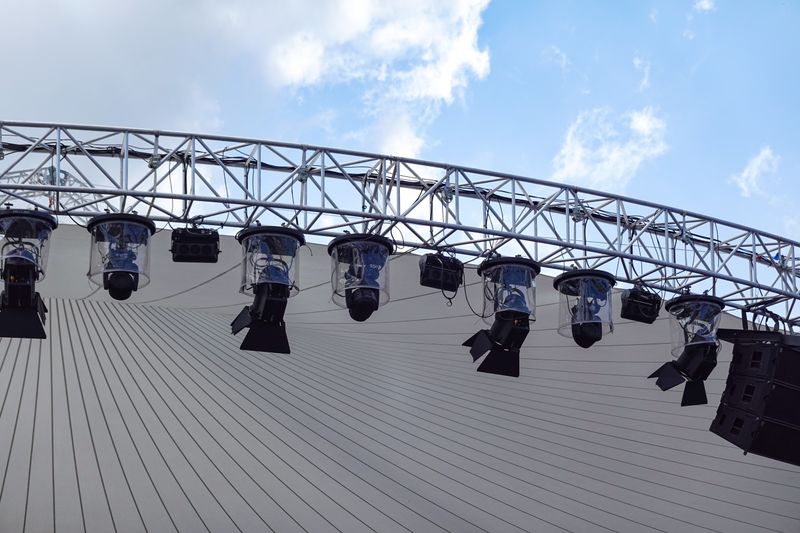
Acts on a festival stage share a sound system, lighting rig and changeover crew, with only minutes between sets to reset the stage.
That limits how much individual production any performer can bring, and it is why festival sets look plainer than the same act's own headline show.
Headliners are the exception, receiving longer changeovers and the ability to bring elements of their own rig, which is part of what the top of the bill actually buys.
Questions readers ask
Is a cover ever better than an original?
Better is not a useful frame here. Covers that displace originals usually do something different rather than something superior, and the difference is what earns them their place.
Do original artists lose out when a cover succeeds?
Writers generally continue to benefit through publishing arrangements. Performers on the original recording have no comparable protection, which is where the real asymmetry sits.
Also by Vaishnavi Rao
- The unbroken take is a scheduling problem long before it is a stylistic oneFilm & Screen
- Development hell is not one problem — it is six, and they take turnsFilm & Screen
- The second act is where films fall apart, and the reason is structuralFilm & Screen
- A soundstage and a location ask completely different things of an actorFilm & Screen