Music
The Players You Cannot Name Are On The Records You Can
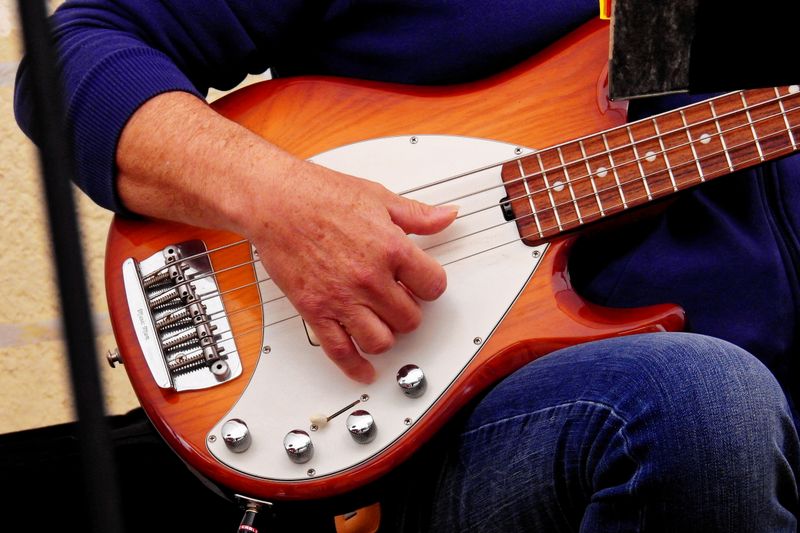
Session musicians perform on a large share of released music without appearing in how the record is discussed, and the working conditions explain both the anonymity and the skill.

A substantial portion of recorded music is played by people whose names do not appear in any discussion of it. Their working conditions shape how records sound.
The job is reading and delivering quickly
A session player arrives with limited notice, encounters material for the first time, and is expected to produce a usable performance within a small number of takes.
The valued skills are therefore sight-reading, immediate stylistic adaptation and consistency, rather than the personal voice usually associated with musicianship.
Studio time is the constraint. A player who needs an extra hour costs more than the fee difference between them and someone faster.
Anonymity is structural rather than deliberate
Records are sold on the identity of the named artist, and a coherent story about a performer is easier to communicate than an accurate account of who played what.
Credits often exist in the physical packaging or the registration data, and neither is where most listeners encounter a record.
The players themselves are generally untroubled by this. The work is professional rather than expressive, and the reputation that matters circulates among the people who book sessions.
Regional groups of players create recognisable sounds
Where a city has a busy studio scene, the same small group of musicians ends up on a large number of records made there.
Their shared habits become a house sound, which listeners attribute to a place or a label when it is really attributable to a handful of people.
When those players disperse or retire, the sound associated with the location changes, and the change is usually explained in terms of taste rather than personnel.
Payment structures separate them from the record's success
Session work is typically paid as a fee for the day, sometimes with additional payments defined by collective agreements when a recording is reused.
What it does not usually carry is a share in the record's ongoing earnings, which sits with the named artist, the writers and the label.
A player can therefore appear on an enduring record and receive nothing further from its endurance, a situation well understood inside the profession and invisible outside it.
The work changed shape rather than disappearing
Cheaper recording and programmed instruments reduced demand for full sessions, and much of the remaining work moved to players recording alone in their own rooms.
That removes the interaction between musicians that produced part of the older sound, and it removes the travel and the studio cost that made sessions expensive.
The skills required shifted accordingly. Delivering a part remotely from a rough guide demands a different kind of judgement than playing live to a room of other people.
Questions readers ask
Is a cover ever better than an original?
Better is not a useful frame here. Covers that displace originals usually do something different rather than something superior, and the difference is what earns them their place.
Do original artists lose out when a cover succeeds?
Writers generally continue to benefit through publishing arrangements. Performers on the original recording have no comparable protection, which is where the real asymmetry sits.
Also by Vaishnavi Rao
- The unbroken take is a scheduling problem long before it is a stylistic oneFilm & Screen
- Development hell is not one problem — it is six, and they take turnsFilm & Screen
- The second act is where films fall apart, and the reason is structuralFilm & Screen
- A soundstage and a location ask completely different things of an actorFilm & Screen