Music
Tribute Acts Are A Live Music Economy Of Their Own
Bands performing another act's material full time occupy a stable commercial niche built on venue economics, audience certainty and the limited supply of original performances.

Performing another act's catalogue professionally is often treated as a curiosity. It is a substantial and stable part of live music, and its economics are more robust than most original acts achieve.
The proposition is certainty
An audience booking a ticket for an original act is buying an unknown quantity, including material they may not know and a performance that may not suit them.
A tribute audience knows precisely what it will hear. The set is drawn from the best-known material and arranged to deliver the recognisable version of each song.
That certainty is worth paying for and is difficult to obtain otherwise, particularly where the original act has stopped performing or plays only in venues of a very different scale.
Venue economics favour the format
Mid-sized venues need to fill a calendar, and an act that reliably draws a predictable crowd is more useful than one that might draw a large crowd or none.
Because the material is already known, promotion costs less. A poster naming the catalogue being performed communicates the entire proposition without further explanation.
The result is repeat booking. A tribute act that performs well becomes part of a venue's regular schedule, which is a level of stability few original acts reach.
The craft is reproduction under scrutiny
Audiences arrive knowing the recordings intimately and notice deviations immediately, so the work involves close analysis of arrangements, tone and phrasing.
Musicians in these acts frequently develop unusually precise technical knowledge of the material, because approximation is audible to everyone in the room.
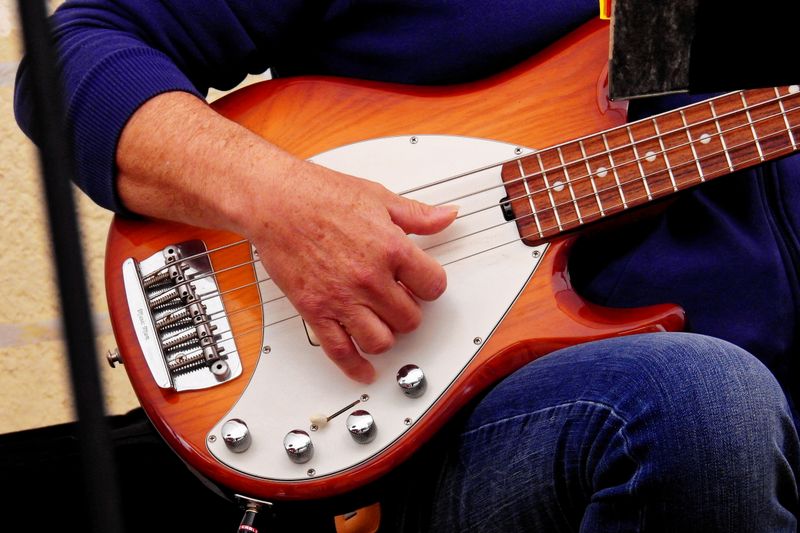
Presentation carries a similar burden. Instruments, staging and delivery are studied and matched, and the effort involved is generally underestimated by people who have not attempted it.
The legal position is narrower than it looks
Performing existing songs live is covered by the licences venues hold, so the performance itself is straightforward and payments flow to the songwriters through those systems.
What is constrained is presentation that suggests an official connection, since names, logos and imagery are protected separately from the songs.
This is why acts adopt wordplay in their names and are careful about how they describe themselves. The music is licensed; the identity is not.
It preserves material that would otherwise go quiet
Catalogues whose original performers have retired continue to be heard live entirely through these acts, in rooms that would never have hosted the originals.
For audiences too young to have attended the original performances, this is the only live version of the material available.
Purists object that a reproduction cannot substitute for the thing itself, which is true and does not affect the demand. What is being sold is the songs in a room, and that is what arrives.
Questions readers ask
Is a cover ever better than an original?
Better is not a useful frame here. Covers that displace originals usually do something different rather than something superior, and the difference is what earns them their place.
Do original artists lose out when a cover succeeds?
Writers generally continue to benefit through publishing arrangements. Performers on the original recording have no comparable protection, which is where the real asymmetry sits.
Also by Vaishnavi Rao
- The unbroken take is a scheduling problem long before it is a stylistic oneFilm & Screen
- Development hell is not one problem — it is six, and they take turnsFilm & Screen
- The second act is where films fall apart, and the reason is structuralFilm & Screen
- A soundstage and a location ask completely different things of an actorFilm & Screen